Search This Blog

Thursday, August 23, 2012

The Science of Service

I'm always encouraging my full-time staff to ask part-time staff for their opinions on how programs are running and how facilities are operating, and I encourage all staff (full and part-time) to be asking our customers questions.  What do they like, what would they like to see different?  What do we do well and what are we missing that would make their experiences better?  Studying our customers is what Disney calls Guestology.  They define guestology as the study of the people for whom we provide service.  Of course, they have it down to a science (see diagram).
For Disney, identifying the amenities, services, and experiences that satisfy and dissatisfy their guests is what helps them understand their guests' wants and needs, and helps them meet and exceed guest expectations.  If it works for a multi-billion dollar company like Disney (for over 60 years I might add), it can work for little West Sacramento Parks.

We will always know what we want and need, but finding out what customers want and need takes time and effort.  Focus groups, public hearings, electronic surveys - these are all ways we can gather input to better understand customer needs and wants, but nothing beats that impromptu, on the spot chat with a customer.  We all find ourselves in conversations with customers when we're visiting programs or on-site at a facility.  We need to add the questions, 'how are we doing, what do you like, what would you like to see different, and how could we make this a better experience for you and your family?' to our conversations.  I'm always surprised by what I hear (and often pleased, too).  Come up with your own questions and begin the study of your customers.
"You don't build it for yourself.  You know what the people want and you build it for them." - Walt Disney
Want to know more about Disney's approach to customer service?  Check out 'understanding your customers using guestology' and add their blog to your reading list.

Wednesday, August 1, 2012

Wanted: Expereinces and Memories

JULY 22:  It's 6:35 am on a Sunday and I'm on a plane about halfway between Sacramento and Phoenix. I'm traveling on business and will spend the next 5 days as a member of a visitation team to another parks and recreation agency.  It's for a re-accreditation visit where we will evaluate the evidence and report our findings.  We are the eyes and ears of a commission that will determine if the agency we are visiting remains in compliance with standards our industry has identified as best practices.   But that's not why I'm writing this.

In the late 1990's, I let it be known that I wanted to travel and see the United States. When I was a kid in the late 1960's and thoughout the 70's, our family took several family vacations by car and motorhome to places throughout the West - Arizona, Wyoming, Utah, Idaho, etc.  We saw Yellowstone,  The Grand Canyon, and Disneyland.  We rafted down the Snake and Salmon Rivers, toured Butchart Gardens, the Olympia Brewery and the old Shipwreck Aquarium.  We saw lots of things, but once high school ended, my travels ended.  For about 20 years I stayed close to home.  College and work were, for the most part, limited to Northern California.  I'm not complaining.  I met my beautiful wife here, got my college degrees here, have family here.  Sacramento and the north state are home for me.  But I always felt I was missing out on seeing other parts of the country, other adventures.

So here's the point of this post - I made it known that I wanted to travel to other parts of the country.  I once heard a person say 'let the universe know what you want and it will . . . . something, something'. I honestly don't remember how the rest of the saying went, but I interpreted it as this: if you want to do something in your life, you have to let others know.  I don't think of this as rubbing a magic lamp or praying, but rather as sharing with others your desires as a means of setting your own will in motion.

Example:  I never had the opportunity to play organized baseball.  I love the sport, but it was not something my parents considered for me when I was young.  In my mid-forties I shared with a buddy my regret over having never played and told him that I would love to play in a camp just to see if I could handle it.  I had played in a few softball leagues, but it just wasn't baseball.   For my birthday (I think it was my 44th) he gave me a garbage bag with about 50 baseballs in it - discarded baseballs from games he had officiated.  The very next year he told me about a fantasy baseball camp that was starting up in a nearby town.  So I had put it out there - I wanted to play baseball - and the opportunity presented itself .


Okay, so I'm romanticizing this whole process (I could just as easily searched the Internet for baseball camps and probably found something), but this wasn't the same as searching for songs on iTunes.  It wasn't a thing I wanted or a place I wished to visit.  It was an experience. More than that, it was an experience I felt I needed in order to: 1) say I had done it, 2) know if I was both physically and mentally capable of handling it, 3) know if it was an experience I would look back on and ,'I'm so glad I did that' or 'well, now I know I don't want to do it again'.  I felt I needed this experience in order to be a better person.  Honestly, I don't know if it has done that, but it's nice to say I've done it (especially at middle age) and I've made some great friends through that experience.  Plus, I got to play ball with my son!

Travel was the same way.  It's hard to afford travel when you have family and all the financial obligations that go with paying for kids' sports, college tuitions, music lessons, mortgage, cars payments, and on and on.  But the universe seems to have responded to my need and brought both the people and opportunities into my life that have made traveling possible.  Not a lot of travel, but enough to take me to places like Canton, MI, Grove City, OH, and Bellevue, WA - places I might not ever think of going, but have had the pleasure of visiting.  Getting to see really cool museums in Kansas City and Atlanta, the campuses of Ohio State and University of Michigan, and to have an office for 4 days in the first ever office of NASA in Houston were all pretty cool experiences.  Walt Disney World, Fenway Park, New York's Central Park, and Gettysburg are all places I wanted to see and fate has taken me there (for those of you who have travelled extensively, this may seem mundane, but not for me).  In fact, as I think of it, my limited travels have given me some pretty unique experiences, such as meeting a former president in Houston and catching a Home Run Derby ball in Seattle during the 2001 All Star Game event.

My point here is that if there is something you really want - a heart's desire - make it known.  Keeping those wants and needs to yourself is simply denying the universe the chance to bring the people and opportunities into your life that can 'align the stars'.  And perhaps the universe is simply waiting, waiting, waiting . . . . for you to ask.

One other thing about sharing what it is you really want - putting your money where your mouth is.  I've learned that if I say I want something and then opportunities come along, I have to act on them.  Sometimes this means some work on you part.  For me this meant taking on additional responsibilities - responsibilities I did not have to take on.  It also meant getting certified, which meant studying and passing an exam.  And it means overcoming fear - fear that you might have to go it alone with no familiar faces in sight.  It's risky, but no more risky than starting a new job or going to a new school.  You just gotta put yourself out there!

That's it for now.  Gotta get ready for this bird to land in Austin, Texas.  Glad I said something, paid attention, and took advantage of the opportunities life brought my way.

        “I'd rather regret the things I've done than regret the things I haven't done.” - Lucille Ball

        "Your time is limited, so don't waste it living someone else's life. Stay hungry. Stay foolish." - Steve Jobs
 
        "For all sad words of tongue and pen, the saddest are these, 'It might have been'."  - John Greenleaf Whittier
 
        "Take a chance!  All life is chance.  The person who goes furthest is generally the one who is willing to do and dare." - Dale Carnegie 

Thursday, July 19, 2012

Autonomy and Flexibility: the freedom to fail and succeed

My career in recreation has been as a programmer and a manager.  With my current employer I am fortunate to have a lot of autonomy and flexibility in my work schedule.  With my first full-time parks and recreation job I inherited a lot of well established programs and spent the first couple of years learning about these programs and running them.  After a year or two I wanted to try a few new things.  The gift of autonomy allowed me to try new program ideas, make changes that I thought were for the best and try to take the program to a new level.  Sometimes it worked out great, but other times it was a failure . . . and some were absolute flops.  I was lucky to have a director who supported my efforts (despite there being a few people in the community who wanted me fired after a change I implemented).  In John Perrin’s  blog article, Happy First Failure, he talks about why failure is valuable and how an individual can benefit from taking ownership of the failure and how a team can be better from the lessons learned.
This same message can be found in these simple quotes:
  • You've got to go out on a limb sometimes because that's where the fruit is.” - Will Rogers
  • “Anyone who has never made a mistake has never tried anything new.” - Albert Einstein
  • “Ever tried? Ever Failed? No matter. Try again. Fail again. Fail better.” - Samuel Becket
  • “I have failed over and over again in my life and that is why I succeed.” - Michael Jordan
  • “Would you like me to give you a formula for success? It’s quite simple, really. Double your rate of failure. You are thinking of failure as the enemy of success. But it isn’t at all. You can be discouraged by failure or you can learn from it, So go ahead and make mistakes. Make all you can. Because remember that’s where you will find success.” - Thomas J. Watson
I’m proud that in my department we take risks and try new things.  We get lucky a lot with programming and the facilities we’ve built, as a majority of them are a success, but we will fail now and then – and we must be tolerant of failure.  Playing it safe is boring and will not help us get to our goal of ’being the department that all other professionals want to work for’.  In short . . . now and then you need to 'go big or go home'.

Another factor about my job that I love is my ability to set my own hours.  I value having flexible work hours.  Typically, I work from 8 am to 5 or 6 pm, but not always.  I workout 3 to 4 times a week during lunch and usually spend an hour-and-a-half playing basketball or tennis, or swimming.  In fact, this has become such a major part of my daily routine that I look forward to because I know I'll get play-time in the middle of the work day.  I still put in my 8 hours, but it might mean working a little later or in the evening at home or over the weekend, which I have no problem doing.  Truth is, I'm a better, more motivated employee because of this.  I probably put in greater effort and work longer than I would if I had to clock-in and clock-out every day.  Jeff James, Vice President of the Disney Institute, wrote a short piece titled, 'What Do Employees Want?'  In it he talks about the things that can make the work experience so enjoyable.  I can honestly say I enjoy all of the points listed in James' article and, in turn, try to do the same for the people who work for me.

It's important to note that these factors are not unique to me in my department - they are part of the department's culture.  Now and then I do have to skip my noon workout because of a project, a meeting, or a deadline, but those are the exceptions, not the rule.  I have the responsibility to get my work done, but am given the autonomy and respect to manage my time and schedule - and it goes an awfully long way towards my job satisfaction.

Wednesday, June 27, 2012

Watch, Listen, and Learn: What We Miss When We Stay Too Busy

    Tuesday, June 26th: I'm spending some time right now watching how people use our pool. It's amazing to see kids having fun just merely jumping off the edge into the water. These kids are not on the slides or playing under the tumble buckets or even in the current channel, rather they are just playing . . . . imaginations fully engaged.
  
    It is my opinion, as a parks and recreation professional, that we don't sit and watch our participants using our facilities or participate in our programs nearly enough. Perhaps we view time spent in such observation as a waste of time or non-constructive since we have an awful lot of work to do at our desks, emails to get to at our computers, meetings to go to, or phone calls to make and voice mail messages that we need to return. I know that is often my excuse for not getting out and watching programs.

    Let's not make the mistake of thinking that what our staff tell us and what our participant surveys show us is all we need to hear in order to know what's working, what's not working, and how our participants are using our parks and programs. That input is very important, but we need to see it firsthand. We need to see it so we can have a better appreciation for the joy our participants get from our efforts, can better understand our customers wants and needs, and give our minds and imaginations the chance for inspiration to strike. Because of our levels of responsibility we will often look for the things others don’t think to look for and simply don’t see. By not personally observing – just sitting back and taking the time to watch others use, play and interact – we miss seeing how our end-users benefit from our planning and efforts, and we may miss the opportunity to make things better.

    I wrote that yesterday and had thoughts of sending it to my staff, but decided not to. Then I read Look At Your Facility With Fresh Eyes  this morning and decided it was the perfect compliment to the point I wanted to make. The practice of observation was something Walt Disney was well known for.
         During his visits to Disneyland, Walt was always “plussing” – looking for ways to improve the appearance of Disneyland and provide more pleasure for the customers. He would study an area and tell his staff: “Let’s get a better show for the customers; what can we do to give this place interest?    

    If it could work for the man who dreamed up and built Disneyland, why can't it work for those of us in parks and recreation or any type of business that serves people?
        During the day [Walt] walked through [Disneyland], observing the people and their reactions, asking questions of the ride attendants, waitresses, store clerks, janitors. From the beginning, he insisted on utter cleanliness. Remembering the tawdry carnivals he had visited with his daughters, he told his staff, “If you keep a place clean, people will respect it; if you let it get dirty, they’ll make it worse.” He didn’t want peanut shells strewn on the sidewalks; only shelled nuts were sold. No gum could be purchased inside the park. Young men strolled through the crowds, retrieving trash as soon as it was discarded.

    Walt had common sense, but he also felt personally responsible for everything in his work, even when the labor was done by someone else.  Observation was an extremely important management tool for Walt and it should be for us as well.  So, take the time to stop being so busy, grab a cup of coffee or a bottle of water, find a place to sit and relax, and just watch how your customers use your services and facilities.  Take some notes and pictures, develop some ideas, and let the insight and inspiration begin.

Sunday, April 22, 2012

Back to the Moon - for Science or Leisure

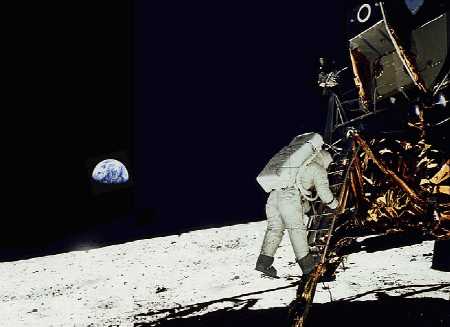
I grew up on the manned space program and was fortunate enough to see the first moon landing by Apollo 11. My parents made sure me and my sisters witnessed history as Neil Armstrong stepped onto the moon. Within a couple years of that historic walk this country was done visiting the moon. What a shame. I remember Skylab, but my greatest memory of that program was it's fiery crash over Australia. Now the Space Shuttle program is over and from what I've read there's nothing ready to take it's place, but there has been talk of returning to the moon. That would be something. Until that time, I'll have to keep my longing for manned space exploration to all this country has available right now - the International Space Station. Here's a pretty cool NASA time lapse video from the International Space Station. Now and then during a full moon I take my binoculars and look at it. Two things always cross my mind. One, we should still be there, and two, we should go back there. As a kid, eating Food Sticks and drinking Tang, I wanted to be an Astronaut. Now I would be happy to be a tourist, but at this pace and with my resources it isn't going to happen. Perhaps my grandchildren will take their kids for a vacation to the Lunar Hilton . . . just maybe.

Tuesday, April 17, 2012

I Wanna Be Like Walt


Walt Disney once said, “In this volatile business of ours, we can ill afford to rest on our laurels, or even to pause in retrospect. Times and conditions change so rapidly that we must keep our aim constantly focused on the future."

I'm a big fan of Walt Disney. I enjoy all the movies and love going to Disneyland and Walt Disney World. I've made two trips to the still relatively new Walt Disney Family Museum in San Francisco. But I love reading about Walt Disney the man, the visionary, the creative genius. I've read eight books about Walt (the best being Walt Disney: An American Original, by Bob Thomas). As a kid I always thought my grandpa looked like Walt; similar hair style and mustache. Coincidentally, they were both born in 1901.

This fascination with Walt started after I attended the Disney Institute in Orlando in 2007. All during our sessions and tours our instructors, Paul and Michelle, kept talking about the vision and passion Walt had for his company, as well as the influence and impact his practices and new ideas had on his competitors, even those organizations not in direct competition with the Disney machine. This left me thinking, "if only I can have a fraction of that vision, common sense, problem solving ability, creative thinking . . . just think of the impact I could have on those I work with and the community in which I serve . . ." Today, our Customer Service model in West Sacramento Parks & Recreation is based on the Disney model, thanks to the influence the Disney Traditions had on me and my staff.

Most fascinating to me about Walt was his pursuit of the future - he was an innovator. Always pushing the edge of possibility. Did you know Walt's most ambitious vision was of a master planned community? He really saw EPCOT as the Experimental Prototype Community of Tomorrow - a living, breathing, functioning community that would always be evolving as new technologies and systems were developed. It was there he wanted to see those innovations put into practice as an experiment prior to their introduction to society at large. Unfortunately, he died before a shovel full of dirt could ever by turned on the 'Project X' site, but I believe he had been watching this vision in his mind over and over. That's how much he wanted to see it happen . . . and believed it would happen. For more on Walt and the original EPCOT concept check out the book Walt Disney and the Quest for Community, by Steve Mannheim.
“There’s really no secret about our approach. We keep moving forward – opening up new doors and doing new things – because we’re curious. And curiosity keeps leading us down new paths. We’re always exploring and experimenting. We call it Imagineering – the blending of creative imagination with technical know-how.” - Walt Disney
In my department I talk a lot about how we can be the first to do something or do it better, set the bar, be trendsetters and be the ones to pioneer new best practices. That means taking risks, being tolerant of failure, being tolerant of more failure, being vulnerable, looking silly, not playing it safe. We dreamed, designed, collaborated, researched, prepared, built, trained, . . . and finally, we had our new West Sacramento Recreation Center. It was risky, but my director and leader, Bob Johnston, had a vision, and it wasn't long before we all started seeing that vision, too . . . even before we saw a single shovel full of dirt turned over. That's why being an innovator is important and having the ability to share your vision is critical.
The family leisure pool at the West Sacramento Recreation Center
In his article, Stop Blabbing About Innovation and Start Actually Doing It, Aaron Shapiro talks about the 10 ingredients in his recipe for having a work culture that helps foster innovation. It's a good read with some great ideas.

Of course if you have the vision and innovation ready and waiting, you could always take Walt's advice:
"The way to get started is to quit talking and begin doing.”
UPDATE: April 22, 2012 - Here's an article from Saturday's New York Times that talks about the Disney Institute: Teaching the Disney way is big business. I'm glad I wrote my piece before this came out . . . whew!

Tuesday, April 10, 2012

Parks and Play: Just Add Adults . . . Please!

As a kid I was never interested in what was happening in the classroom. I wanted to play, and play just didn't seem to happen indoors for me. Indoors meant having to sit still, sit up straight, pay attention, stop eating the paste . . . I don't think I ever did this, but seriously - I was a real pain in the keester for every teacher I had at Orville Wright Elementary School. Poor Ms. Bravo, poor Mrs. Peters. They were my favorite teachers, but nothing they seemed to do could get my mind off the playground and into my school work.

Perhaps becoming a parks and recreation professional was the logical path for me. I will never claim to be very bright and stumbling onto leisure as a field of study is proof of that (I should mention I spent 7 years in community college trying to figure that out, but I'm glad I did). Leisure, recreation, parks and play are my passion, especially when you see the benefits they have in the lives of individuals, families and communities. In California, "Parks Make Life Better!" is our profession's brand promise, and I have yet to meet anyone who didn't agree with this statement.

I love play. Even today I love playing basketball. I also love playing nerf ball tennis. Scott and Kaisa are two people I work with and for a while we would play tennis, using foam tennis balls, inside our Rec Center gym (mainly because it was cold and wet outside). Man, is it fun! One day we started playing the game with two (2) balls in play - it wore us out, but we had a blast. We modified the game again and said all walls and the ceiling were in play and if either ball comes to a stop on your side of the net, your team loses. We lasted about 5 minutes, but it felt like forever, and so we named this game 'Forever Ball'. I think we need more play like that where we make the game up as we go along.

Back outside now . . . you heard me . . . go outside and play!

We need to get outside and play, especially adults. Of course kids need to get outside and play, too, but we adults would benefit greatly from some goofing around, playing silly games, and simply being more active for the sake of fun and laughter. In his article, "It's Called Play", Jay Heinrichs talks about the benefits of play for adults and the value of putting recess back into our daily lives. Now that we're all grown-up (well, at least all of you), that recess can take place in our local parks . . . and no need to worry about the school bell ringing.

Duck, duck, goose anyone?